
 Request a study
Why This Research Can Be Trusted
Most conclusions about the “changed consumer” are based on surveys — that is, on what people say about themselves. We work with what people don’t control: involuntary brain and facial reactions to specific commercial messages.
We have been measuring these reactions continuously since 2018, using a single methodology. This means we have a rare thing — a pre-war baseline against which every subsequent year of the war can be honestly compared. Not “it seems things have changed,” but measured dynamics on the same metrics, on a single scale.
Three profound shifts emerge from these measurements. Each of them is not an abstraction, but a mechanism that affects the outcome of your campaigns every day. And each comes with practical takeaways.
What We Measure
For the insights below to be easy to read, it’s worth briefly explaining the three metrics we rely on:
EMOTIONAL PROFILE. We capture facial (micro-facial) movements using the Affectiva module and decompose them into basic emotions — joy, sadness, anger, surprise, and so on. The face reacts faster than conscious control can kick in, making this an honest snapshot of affect.
APPROACH MOTIVATION. A measure of how much a person is “drawn” toward a brand or product on screen, rather than away from it. Measured via frontal alpha asymmetry in the brain. A positive value indicates approach, desire; a value near zero indicates indifference; a negative value indicates rejection.
COGNITIVE LOAD. How much mental effort is required to understand a message, process it, and remember it. Here the “golden mean” matters: too complex causes stress and rejection, too simple is boring and goes unnoticed.
Insight 1. Emotional Swings
INSIGHT 1/3
The sadness of the Ukrainian consumer is not a reaction to your ad — it’s a constant emotional background through which they read it. And this background has made them more attentive, more demanding, and more sensitive to falseness than ever before.
What the Measurements Showed
We have been measuring the average profile of emotional reactions to commercial messages since 2018. The picture changed in three waves:
- Before 2022, the most frequent and intense emotion was Joy. This is logical and expected for advertising messages.
- 2022–2023 — emotional numbness. Reactions to commercial materials dropped significantly: the audience seemed to go numb.
- 2024 — the profile restructures, and Sadness surges into the lead. But this is not “pure” sadness — it’s a complex affective cocktail: dominant sadness, along with noticeable joy and elevated anger simultaneously.
Emotional Profile
Chart 1. Average emotional reactions of Ukrainian consumers to advertising communication, 2018–2024
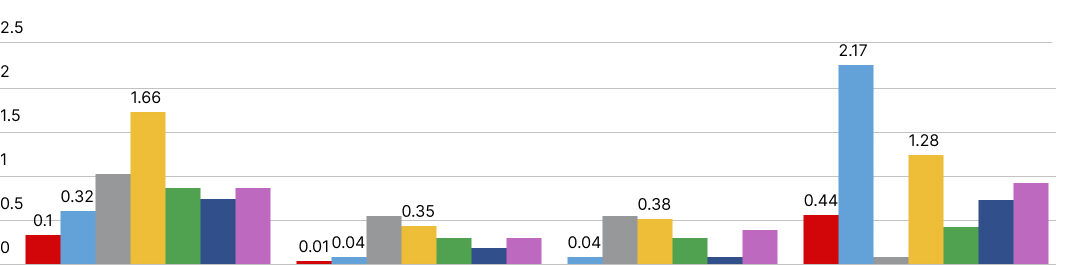
This is the profile of a mobilized but exhausted society. Emotional reactivity has returned compared to the numbness of 2022–2023, but it has returned in a polarized, ambivalent register. The strategic conclusion is obvious: a campaign that addresses only one emotion risks missing this complexity entirely.
What the Measurements Showed
Here it’s important to understand the nature of the indicator, otherwise the conclusions will be wrong.
The emotion metric reads emotion from facial muscles. And muscles change with frequency of use — that’s physiology. If a person smiles often, “crow’s feet” gradually appear at the corners of their eyes; if they’re often surprised, their eyebrows rise slightly; if they’re often sad, a “sad mask” forms: drooping corners of the eyes and mouth.
So Sadness leads not because modern advertising causes sadness, but because a frequently experienced state of sadness has literally changed the average Ukrainian’s face, making their neutral expression sad. We are dealing with constitutionalized sadness — sadness that has become etched into the very structure of the face and become its default setting.
That is precisely why it’s a background, not a reaction. And that’s exactly why the key question is: how do you communicate with a consumer for whom sadness is not today’s mood, but the new normal?
What Marketers Should Do About It
Sadness is a passive, retrospective emotion, but it has a clear neurocognitive logic, from which six practical directions follow.
1. Speak with arguments, not gloss.
Sadness switches the brain from heuristic mode to a detailed, analytical one. It signals to the body: “this situation requires analysis” — whereas joy signals “the context can be trusted.” The practical consequence: peripheral routes of persuasion (brightness, celebrities, soft-sell) work worse against a backdrop of sadness than central, argument-based, evidence-driven messages. A sad viewer is more attentive to inconsistencies, falseness, tonally wrong messages. This fundamentally disproves the stereotype of the “passive, inattentive” sad consumer: in reality, they are the most meticulous auditor of your message.
2. Remember: sadness is not the worst emotion for the economy
Sad people are not stingy — in certain cases they are even willing to pay more. Sadness activates an introspective loop that devalues the current “self” (“I am not who I want to be right now”) while simultaneously raising the value of change, renewal, a new “self.” Purchasing becomes a tool of this transformation: consumption starts working as an act of restoring normalcy, agency, dignity — not as a purely hedonistic act.
Mandel, Rucker, Levav, and Galinsky (2017) integrated this into the Compensatory Consumer Behavior Model. The basic idea: when a person feels a gap between their actual and desired “self” — due to loss of control, status, meaning, belonging, or safety — consumption acts as one of four compensatory mechanisms. A purchase can be:
Direct resolution
Buying what restores that specific deficit (for example, a status product when facing a status threat, or “home” attributes when lacking a sense of coziness)
Symbolic self-completion
Buying an attribute of the identity one feels is shaken (products with Ukrainian symbols, Ukrainian brand products, Ukrainian books)
Fluid compensation
Filling one deficit in a completely different domain that one can control (floristry, cooking, beauty routines, sports, hobbies)
Escapism
Buying an experience that offers temporary forgetting (for example, online gaming, online casinos, the fantasy genre in film and literature)
A key clarification for practice: activating a sad consumer means activating a behavioral output — engagement, intent, purchase — while the background emotional state remains unchanged. Sadness is a state in which a person can fully make decisions, act, buy, move forward. It’s simply that the route taken to get there is different.
3. Sell meaning, not pleasure
Sadness activates a search for meaning: evolutionarily, it kicks in during losses that require reassessing life priorities. Viktor Frankl, in existential psychology, showed that sadness correlates with heightened sensitivity to questions of meaning rather than pleasure. Calls to indulge in this state are perceived as shallow, and sometimes even irritating.
Research confirms this. Aaker, Rudd, and Mogilner (2011), in “If Money Doesn’t Make You Happy, Consider Time,” showed that in states of reflection and sadness, appeals to time (how you spend it, with whom, for what purpose) work better than appeals to money. Mogilner (2010) demonstrated that under heightened self-focus — and sadness is a classic such state — people prefer meaningful experiences over merely pleasant ones.
At the message level, this translates to: instead of “buy it because it’s tasty / convenient / fast” — “buy it because it’s a piece of your life that matters.”
4. Don’t deny reality — be congruent.
Sadness is a state of heightened sensitivity to congruence (the fit between a message and its context). A sad person instantly detects: “this ad is pretending nothing is happening.” And this isn’t conscious analysis, but a fast affective reaction that fires before rational processing kicks in. Pham’s research (1998, 2004) on “affect as information” shows that the match between emotional background and message tone is one of the strongest predictors of successful influence.
Important: this doesn’t mean sad advertising. It means advertising that doesn’t deny the background. Between these poles lies a wide space. A minimal gesture of acknowledgment can be very quiet: a slower pace, “breathing room” in the composition, no forced cheerful chorus, natural lighting instead of hyper-studio lighting, real people instead of an idealized cast, insights rooted in today rather than 2019.
5. Support the state, don’t worsen it.
Sadness means a deficit of positive emotions, so commercial messages are expected, at minimum, not to make things worse. Right now people respond poorly to dark color palettes, depictions of loneliness on screen, minor-key music. And they respond well to bright or light colors, close human relationships, mutual care, positive scenarios, and careful, context-rooted encouragement — like the signs in “Silpo” [a Ukrainian supermarket chain].

6. Support the state, don’t worsen it.
In our research, we observe growing influence of the Autonomy motivational model — the ability to make one’s own choices, choose a course of action, be a subject rather than an object. People show a growing demand for small, controllable pieces of life where agency is restored, as well as for brands and products that offer order, structure, predictability, and reliability.
In communication, this means messages about control, choice, ritual, predictability. Not “wide selection” as a quantitative trait, but choice as an act of restoring agency: “your rules,” “however works for you,” “you decide.” Advertising built around rituals — morning coffee, evening tea, weekends with family — sells not the product itself, but a controllable point in the day or week.
At the same time, sadness activates belonging: evolutionarily, this is a signal that “you need others, return to the group.” Demonstrating belonging to one’s own community, the ability to care for loved ones, and the feeling of “your people nearby” act like a painkiller. In communication — “we’re together,” “ours,” “our own,” but not as clichés, rather as a precise appeal to an activated need for belonging. Collective identity becomes a precondition for purchase, and brands win when they position themselves as “part of us” rather than as “a solution to your problem.”
Insight 2. Motivation Crisis
INSIGHT 2/3
The Ukrainian audience hasn’t lost interest in brands — it has lost the free, background willingness to approach them. Now that willingness has to be earned, and the price of admission is a relevant value message.
What the Measurements Showed
We compared the average motivational response to brand and product appearances in advertising from 2021 with the period 2023–2024
Pre-war “natural” motivation toward brand communication (a value of 0.03) faded completely to zero during the war years. This is a classic sign of emotional numbing and reduced approach motivation in a population under chronic stress. But messages with a pronounced value component restore motivation to 0.02 — that is, almost back to the pre-war level.
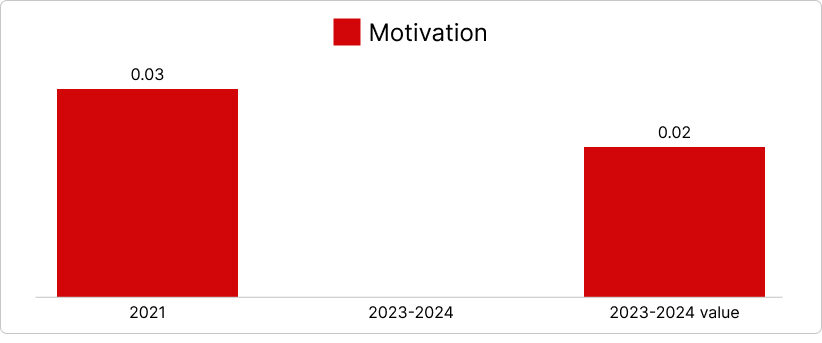
Chart 2. Approach motivation toward brands: pre-war advertising (0.03) → average 2023–2024 advertising (≈0) → advertising with a value component (0.02).
What Marketers Should Do About It
1. Treat values not as an add-on, but as a precondition for motivation to exist
This is the most important and most practical conclusion. In a standard marketing brief, value-based communication is treated as a side addition to the main “product” message — a separate campaign, separate budget, separate performance metrics. Our data show an inversion of priorities: the value layer doesn’t add to motivation — it provides the very possibility of motivation. Without it, baseline motivation equals zero, and any product message lands in a motivational vacuum.
In practice, this means the value frame must not be a separate campaign, but a foundational layer of all communication — including product, conversion, and promotional messages. This isn’t “do social advertising instead of product advertising.” It’s “embed the product message in a value context, or it won’t activate motivation.”
2. Beware of value inflation
Value-based messages still work for now, but this is a premium resource that’s easy to exhaust: if all brands switch to value-based communication simultaneously, it will devalue through oversaturation. Three rules help avoid this:
- Specificity over universality. “Support for Ukraine” or “together we are stronger” are universal formulas that are easily repeated and quickly burn out. In contrast, a specific value position that stems from a brand’s real business practice (like how Monobank builds communication around donations, or agricultural companies around food security) creates a unique value territory.
- An authenticity test. Does the company actually do what it says? A gap between stated values and real actions is detected instantly and turns into a negative reaction — motivation flips toward rejection.
- Rarity beats constancy. A brand with consistent product communication and a periodic, powerful value moment in focus will have higher motivation than a brand with a constant value background, where the message turns into noise.
3. Ground value in the category, not in corporate universality
The most common market mistake is “horizontal” values that fit any brand in any category: “we’re together,” “victory,” “resilience,” “family.” They don’t differentiate the brand and burn out quickly, and an audience with heightened scrutiny instantly reads their formulaic nature as a sign of insincerity.
What works instead is a category-rooted value that logically follows from the category’s function and therefore has the right to be spoken by that particular brand:
- Telecom has an organic right to the value of connection — with family abroad, at the front, in temporarily occupied territories. This is literally what the category sells.
- Everyday consumer food has the right to everyday dignity — an ordinary dinner in conditions where normalcy itself has become an achievement.
- Agribusiness has the right to food security — this is its real function.
- Banks have the right to predictability and control amid chaos.
- Pharmacies — to care for loved ones.
- Building materials — to rebuilding.
A category-rooted value creates protected territory: competitors can’t simply copy it, because it requires real business practices that back that value up. This shifts value communication from tactical (one campaign a year) to strategic (positioning for 5–10 years).
4. Make the value logic functional, not rhetorical
The second systemic market mistake is building the transition from value to product rhetorically: “…because we’re by your side,” “…for those who care,” “…created with care.” These are connective phrases that formally link things together but don’t explain how, specifically, the product serves the value. A sad, analytical audience, due to heightened attention to arguments, reads through this rhetorical emptiness and doesn’t let the motivation flow from the value to the product.
What works is a concrete mechanism of service:
- not “we’re by the family’s side,” but “a plan with unlimited calls abroad, because we know that half your calls go there”;
- not “we care about your normalcy,” but “we’ve kept the price of bread unchanged since February 2022, because in this category, stability is normalcy”;
- not “we’re with you in dark times,” but “our branches keep working during blackouts, because we’ve installed generators in every one of our 200 locations.”
Example
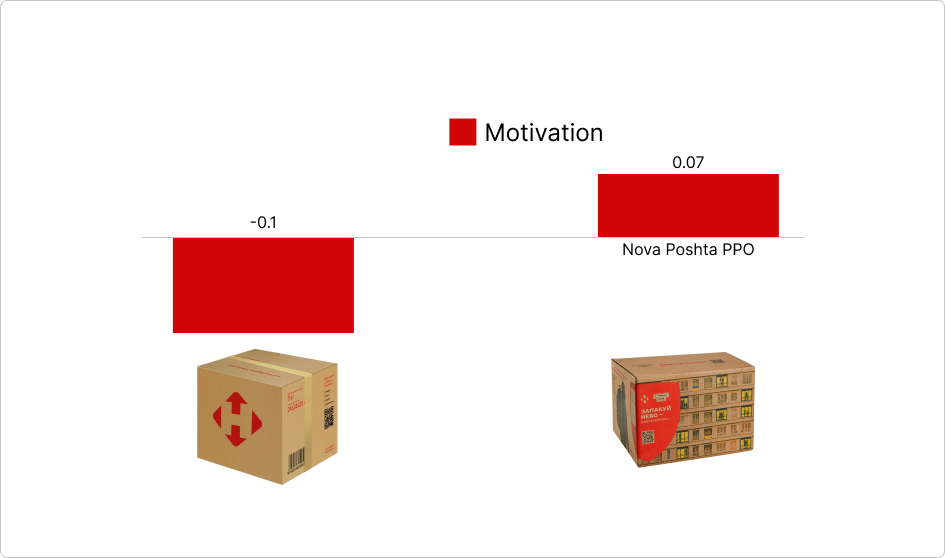
Motivation measurements for brand appearances in a commercial TV spot from “Nova Poshta” and in the video for the “Pack the Sky — Power Up Air Defense” campaign show not only a dramatic difference in motivation, but also that against the backdrop of a socially important message, the brand itself becomes more desirable and stronger.
Why This Is Here to Stay
The modern Ukrainian audience has lost its free, background willingness to approach commercial messages. Brands that pay the price of admission with a relevant value message gain access to approach motivation almost equal to pre-war levels. Brands that don’t pay it remain stuck in a motivational vacuum — regardless of product, budget, or creative quality.
And this isn’t a temporary state of affairs. If one assumes that even after the active phase of the war ends, its emotional consequences will persist for years — post-traumatic symptoms, secondary trauma, a sense of vulnerability, everything described in the literature on post-conflict societies — then the baseline motivational level of the Ukrainian audience will remain reduced for a long time. Which means value-mediated commercial messaging has a chance to become not a wartime anomaly, but a new norm of the Ukrainian market for decades to come.
Insight 3. Cognitive Burnout Under Chronic Stress
INSIGHT 3/3
Ukrainians no longer put in the effort to understand you. If a message doesn’t register instantly, it’s simply discarded. Complexity is costlier today than ever before.
What the Measurements Showed
One of the biggest changes in wartime information perception is the depletion of the ability to withstand cognitive load. This metric shows the level of mental effort required to understand a message, initially process it, and remember it.
For marketing communication, cognitive load needs to sit in the “golden mean”: not high (complex, up to the point of stress) and not low (boring, overly banal). The dynamics look like this:
- The pre-war average was 0.54. This meant a person could understand a message and retain something for the future without much strain.
- Starting in 2022, the indicator rises. People need more effort to maintain the pre-war level of understanding of information.
- In 2024, the indicator falls even below the pre-war level. And this is not adaptation, nor a return to comfortable processing. On the contrary — it means people have grown tired of straining themselves.
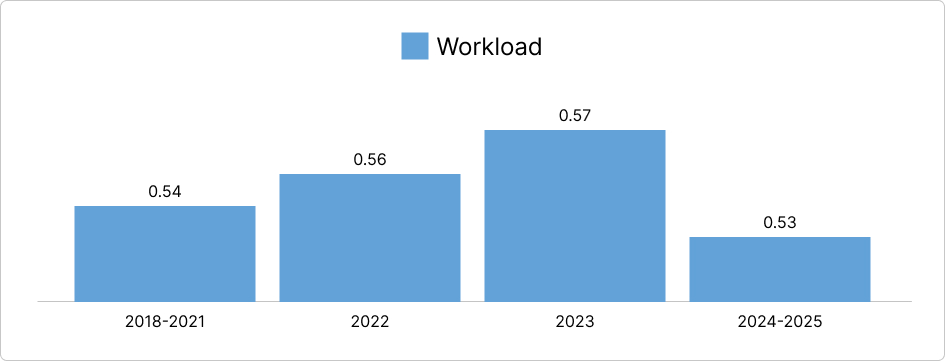
Chart 3. Cognitive load when perceiving commercial messages: pre-war years (0.54) → 2022–2023 (rising) → 2024 (falling below 0.54 due to exhaustion).
The direct consequence: if a message or piece of information isn’t understood instantly, it’s simply discarded — no effort is made at all. So any communication with an element of complexity — too much text, unclear storytelling, overloaded design, several messages at once, a fast pace — instantly loses the viewer or user.
What Marketers Should Do About It
The task today is maximum permissible simplification: of the message, the design, and the user journey. Concretely, this means:
One message per contact.
Don’t try to say everything at once: every extra message takes away a chance from the main one. If a communication has several goals, spread them across different contact points.
The main idea in the first seconds.
Put the essence at the start (for dynamic stimuli) and at the top or center (for static stimuli). Don’t make the audience “wait” for the meaning — they don’t have the resources for that.
Less text, more breathing room.
Shorten your wording, remove complex constructions, let the eye rest. Clean design gets read; overloaded design gets ignored.
A slower pace.
Fast editing and a dense flow of information work against you: in a tired brain, they push cognitive load past the point of refusal.
A shorter user journey.
Every extra step toward a purchase or action is a point where you lose the person. Remove everything that isn’t essential:
- fewer steps (fields, confirmations, transitions)
- fewer stimuli (banners, carousels, promos in the action zone)
- less uncertainty (status + next steps)
- less penalty for mistakes (saved data, one-step correction)
An important nuance
simplifying the form is not the same as dumbing down the content. The first insight showed that the audience has become analytical and demands substance and arguments. The third insight adds: this substance needs to be delivered so it can be grasped instantly. Depth of meaning and simplicity of form.
What This Means Overall
Put the three insights together, and a single portrait of the wartime consumer emerges. They are:
- reflective — the background sadness has switched them into a mode of meticulous analysis, making them attentive to arguments and merciless toward falseness;
- value-selective — their motivation toward a brand is now unlocked only by relevant meaning, not by the product on its own;
- frugal with effort — they will not spend mental resources on anything that isn’t clear at a glance.
At first glance, there’s a contradiction here: being analytical and substantive (insight 1) — while also being extremely simple (insight 3). In reality, there is no contradiction. Substance is not the same as complexity. A message should be deep in meaning and light in form: an honest argument, a category-rooted value, and a concrete mechanism — presented clearly, calmly, and without excess.
And this isn’t a limitation but a filter that purifies. The wartime consumer ignores superficiality, cliché, and fuss — and rewards honesty, substance, and self-respect. For brands ready to rise to the moment, these are the best conditions in years to build truly strong relationships with the audience. Because when all the communication around them has lost its free trust, the one that earns it will gain an audience that has already learned to tell the real from the fake.
A Guide for Marketers: Insights and Practical Takeaways on a Single Page
Emotional Rollercoaster
Sadness is now a constant backdrop rather than a reaction to advertising. It has made consumers more attentive and demanding.
Motivation Crisis
Brands are no longer appealing "by default"—motivation is driven by perceived value.
Cognitive Burnout
Audiences no longer invest effort in understanding complexity—they simply reject it.
 Contact Us